Python Web Development Company in Madurai
When a business needs more than a standard website, the right application can make everyday work easier. It might be a customer portal, an internal dashboard, an online booking system or software that connects information across different business tools.
Our Python web development approach starts with the problem you want to solve. We consider how people will use the application, what information it needs to manage, which systems it must connect with and how the software should be maintained after launch.
If you are looking for a Python development company in Madurai, we can discuss your proposed application, review its requirements and identify a suitable technical approach before development begins.
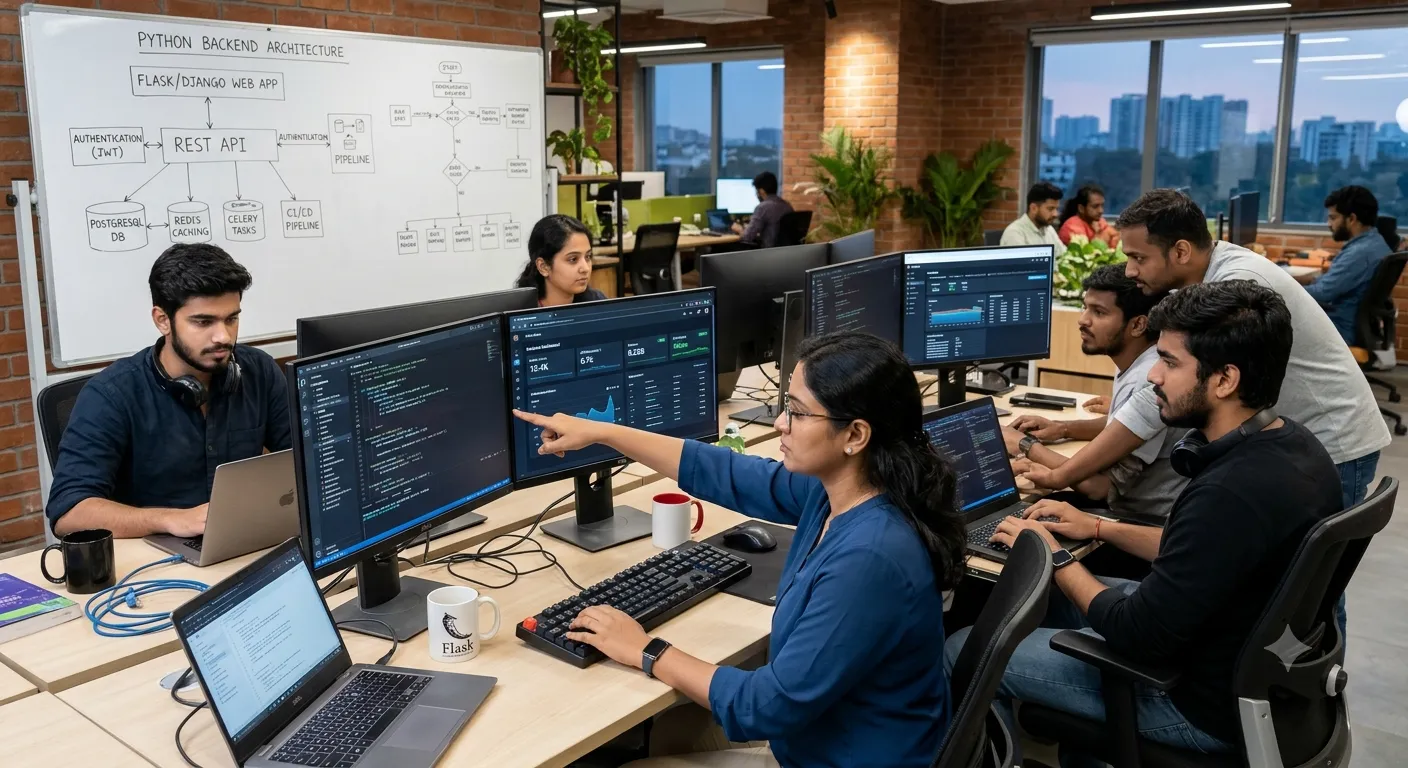
Python Web Development Services in Madurai
Software Designed Around Your Business Requirements
Not every business needs the same type of software. One company may need a secure portal for customers, while another may want to reduce manual data entry or connect an existing website with an internal system. The features and technical structure should follow the actual requirement.
Our Python web development services can be planned around the application you need, the systems already in use and the responsibilities the software must handle.
Custom Python Web Application Development
A custom web application is useful when a business process cannot be handled properly by a basic website or an off-the-shelf tool. Examples include customer portals, booking workflows, internal dashboards and systems that organise information from multiple sources.
Development begins by mapping the users, actions, information and rules involved. This helps define the essential features before additional functionality is introduced.
Django Web Application Development
Django is a Python web framework that provides an integrated foundation for building data-driven applications. Its features can be useful when a project needs structured data models, authentication, routing and administrative functionality.
It may suit business portals, content-driven platforms and applications with several related data types. The final design depends on the required workflows, access rules and integrations.
Flask Application Development
Flask offers a lightweight starting point for Python web applications. It can be appropriate when the project needs a flexible structure and the development team wants to choose the components required for the application.
Possible uses include focused web applications, service endpoints and smaller backend systems. Database access, authentication, validation and other components must be selected and configured according to the project's requirements.
Python API Development and Integration
Applications often need to exchange information with other websites, payment services, business tools or mobile applications. APIs provide a structured way for compatible systems to communicate.
Python-based API development can include request validation, authentication, permissions, response formatting, error handling and documentation. The integration plan also considers rate limits, failures and the security of exchanged information.
Database-Driven Business Applications
Applications that manage customers, bookings, products, transactions or reports need a dependable way to store and retrieve information.
Database planning considers the relationships between records, data validation, access permissions and the queries used by the application. PostgreSQL, MySQL and other databases may be considered according to compatibility, workload and operational needs.
Existing Python Application Improvements
An application may need attention when bugs become difficult to resolve, dependencies become outdated, performance deteriorates or the business needs new features.
Before making changes, we recommend reviewing the existing code, framework version, database structure, deployment environment and available documentation. This helps identify risks and establish a realistic plan for maintenance or redevelopment.
Our Python Web Application Development Process
From Understanding the Problem to Preparing for Launch
A successful application needs more than a working interface. Its data, permissions, integrations and error-handling behaviour must support the way people actually use the software.
A defined process helps identify important decisions early, reduce misunderstandings and give both sides a clearer view of the work involved.
Requirement Discovery
We begin by discussing the business problem, intended users, current workflow and outcome the application should support. We identify essential features, external systems, data requirements and known limitations.
The result is a clearer scope for estimating the development effort.
Application and Database Planning
The next step is to plan the main screens, navigation, user roles, data relationships and application components. We also identify which systems need to communicate with one another.
Django, Flask or another suitable Python approach should be selected based on the requirements rather than simply following a technology trend.
Frontend and Backend Development
The frontend presents information and provides controls for users. The Python backend handles the application logic, data processing, permissions and requests that take place behind the interface.
Both parts must work together so that the information displayed to a user matches the rules applied by the application.
Feature and API Integration
Once the main application structure is available, the agreed features can be connected. Depending on the scope, these may include APIs, notifications, search, reporting, file uploads or external services.
Integration work also needs to account for invalid requests, service interruptions, access permissions and unexpected responses.
Testing and Quality Checks
Testing helps confirm that important user journeys work as expected. Checks may cover form validation, permissions, database operations, API responses, error handling and different screen sizes.
The testing plan should reflect the application's complexity and the consequences of errors in its business workflow.
Deployment and Handover
Before launch, the hosting environment, application configuration, database access, secrets and deployment requirements need to be prepared.
The agreed handover should clarify access credentials, documentation, maintenance responsibilities and the process for requesting future improvements.
Choosing a Python Development Company in Madurai
Questions Worth Asking Before You Start a Project
The right development partner should understand the business problem as well as the technology. Before approving a project, make sure the proposed features, responsibilities and delivery expectations are clear.
Use the following points to assess whether a development proposal addresses the needs of your application.
Understanding of Your Workflow
A developer should understand who will use the application, what each user needs to do and which business rules must be followed. This understanding affects the design of screens, data and permissions.
A Framework That Fits the Project
Django, Flask and FastAPI solve related but different problems. Ask why a particular framework is suitable for your requirements and what supporting components the application will need.
Clear Project Scope
The proposal should describe the features, integrations, deliverables, testing responsibilities and exclusions. This makes it easier to compare quotations and manage changes during development.
Data Protection and Access Control
Applications handling customer or business information need appropriate authentication, authorisation, validation and secure configuration. Ask how access will be managed and how sensitive information will be protected.
Testing and Deployment Planning
A working development version is not the same as a production-ready application. Clarify how testing, hosting, environment configuration, backups and launch checks will be handled.
Documentation and Future Maintenance
Understand how you will receive access to the application, its documentation and the relevant source code under the project agreement. Also clarify how bug fixes, upgrades and additional features will be handled after launch.
Python Frameworks and Technologies for Web Applications
Selecting the Right Tools for the Job
Python is used for server-side application logic, data processing and API development. A complete web application may also require frontend technologies, a database, authentication, hosting and monitoring.
The technology stack should be selected according to the project's functionality, expected workload, integrations and maintenance needs.
Python and Django
Django provides an integrated framework with tools for URL routing, data models, request handling and administrative functionality. It can be useful for applications that benefit from a structured approach to managing related information and user permissions.
Python and Flask
Flask provides a lightweight framework that allows developers to select the components needed for a project. The application architecture must account for routing, data access, authentication, validation and other required features.
FastAPI and REST APIs
FastAPI is designed for building APIs with modern Python features and type hints. It can be considered for services that exchange structured data with websites, mobile applications or other software.
The API design should include appropriate validation, authentication, error responses and documentation.
Frontend Integration
HTML, CSS and JavaScript can be used to build the browser interface for a Python application. Depending on the project, the frontend may use server-rendered pages or communicate with a separate frontend through APIs.
The choice depends on interaction requirements, accessibility, performance and the team's maintenance approach.
Database Design
Applications need a consistent way to store and retrieve information. PostgreSQL, MySQL and other suitable databases may be considered after reviewing the data structure, transaction requirements, query patterns and hosting environment.
Data integrity, permissions, backups and migration planning are important parts of database management.
Security, Testing and Deployment
Production applications need appropriate secret management, secure configuration, dependency maintenance, testing and deployment procedures. The exact controls depend on the application's risks and intended use.
Hosting, monitoring and backup arrangements should be agreed before launch rather than left undefined.
Python Web Development Cost in Madurai
What Determines the Cost of a Python Application?
The cost of a Python web application depends on what it needs to do. A small application with a few screens and straightforward data handling requires a different level of effort from a platform with multiple user roles, third-party integrations and complex business rules.
A useful quotation should explain what is included, which assumptions affect the estimate and which items may require additional work.
Factors That Affect Your Project Budget
Application Features
The number of screens, workflows, reports, user roles and business rules affects the amount of development and testing required.
Framework and Architecture
Framework selection, application structure, background processing and separation of services can affect the implementation effort. The simplest suitable approach is not always the same for every project.
Database and Data Migration
Projects involving complex relationships, existing records, data cleanup or migration may require additional planning and validation.
Third-Party Integrations
Connecting payment services, external APIs, messaging systems or other business software adds integration, testing and error-handling requirements.
Security and Testing Requirements
Authentication, permissions, sensitive data, automated tests and additional quality checks should be considered when estimating the work.
Hosting and Ongoing Maintenance
Infrastructure, monitoring, backups, dependency updates and post-launch support can affect the continuing cost of operating the application.
How to Request a Useful Project Estimate
Explain the business problem you want to solve, the people who will use the application, the main features required and any existing systems it must connect with. Mention whether you already have a website, database or partially developed application.
If you have examples of similar software, screen sketches or a list of required reports, include them in your enquiry. These details help clarify the scope before a quotation is prepared.
Python Application Deployment and Maintenance
Planning for the Application After Development
A web application continues to need attention after launch. Its dependencies may require updates, user requirements may change and connected services may alter their APIs.
Before development is completed, agree on how the application will be deployed, who will manage access and what support will be available.
Hosting and Environment Setup
A Python application needs a compatible runtime, appropriate server configuration, environment variables and access to its required services. Hosting should be selected according to the application's workload and operating needs.
Application Configuration
Development and production environments should be configured carefully. Database credentials, API keys and other secrets should not be exposed in publicly accessible application code.
Testing Before Release
The release process should check important user journeys, database access, permissions, error handling and integrations. Critical changes should be tested in an appropriate environment before reaching production.
Updates and Bug Fixes
Frameworks, libraries and operating environments change over time. Maintenance may include compatible dependency updates, bug investigation and testing after changes.
Backups and Recovery
Backup frequency, retention, access permissions and recovery procedures should reflect the importance of the stored information. A backup is most useful when recovery can be tested.
Future Features and Documentation
New reports, integrations and user workflows may be required as the business changes. Clear documentation and an agreed change process help assess future work without relying on assumptions.
What Can You Build With Python Web Development?
Examples of Business Problems a Web Application Can Solve
Python can support a wide range of server-side applications. The right use case depends on the information a business manages, the tasks people perform and the systems already in place.
These examples are possible application types, not a claim that every business needs a custom platform. In some cases, existing software may already meet the requirement.
Customer and Employee Portals
A portal can provide authorised users with access to relevant records, requests, documents or account information. Its design should make permissions clear and prevent users from viewing information they are not allowed to access.
Booking and Appointment Systems
A booking application may manage available slots, customer details, confirmation messages and changes to reservations. Scheduling rules and conflict handling need careful planning to avoid duplicate or invalid bookings.
Inventory and Operational Dashboards
A dashboard can bring selected operational information into one place. Depending on the requirements, it may include searchable records, status updates, summaries, permissions and exportable reports.
Reporting and Data Management Tools
Businesses working with repeated spreadsheets or separate information sources may benefit from a structured application for storing records, applying validation rules and preparing reports.
Frequently Asked Questions About Python Web Development
-
Python web development uses Python and suitable web frameworks to build server-side applications, APIs, database-driven platforms and business systems. The right approach depends on the required features, integrations, security and expected workload.
-
Django can suit applications that benefit from an integrated framework and built-in administrative features. Flask offers a lightweight foundation for applications that need a more flexible structure. FastAPI is designed for building APIs and supports modern Python type hints. The choice depends on your requirements and implementation plan.
-
Yes. Python can support business web applications such as internal dashboards, booking systems, portals, inventory tools, reporting platforms and applications that connect multiple services. The features and architecture should be planned around the actual workflow.
-
It may be possible through APIs, database integration or supported third-party services. Feasibility depends on the existing system, available interfaces, access permissions, data formats and security requirements.
-
The cost depends on the number of features, application complexity, integrations, database requirements, user permissions, testing and deployment needs. A project estimate should follow a review of the requirements rather than rely on a price that may not fit the scope.
-
The timeline depends on the scope, design, integrations, data structure, testing and client approvals. A small application and a multi-user business platform require different levels of planning and development. A realistic schedule can be provided after the requirements are reviewed.
-
Python frameworks such as Django REST Framework, Flask and FastAPI can be used to build APIs. The design should account for authentication, permissions, validation, error handling, documentation and the systems that will consume the API.
-
Security measures should match the application's risks and features. Common considerations include authentication, authorisation, input validation, secret management, secure configuration, dependency updates, logging and appropriate data protection. No application can be guaranteed completely free of vulnerabilities.
-
Existing Python applications can be assessed for bug fixes, dependency updates, performance issues, compatibility and new requirements. The first step is to review the codebase, deployment environment, documentation and available access.
-
Prepare a summary of the business problem, expected users, main features, integrations, existing software, preferred timeline and budget range. Wireframes, example applications and existing technical documentation can also help clarify the scope.
Python Web Development Services for Madurai Businesses
Discuss Your Application Requirements With Our Team
Businesses looking for Python web development in Madurai may have very different needs. Some want to build a new application, while others need to connect existing systems, organise business information or improve software that is already in use.
Whether your business operates around Anna Nagar, KK Nagar, Tallakulam, Simmakkal, Goripalayam, Iyer Bungalow, Bypass Road, Narimedu, Thiruparankundram, Pasumalai, Mattuthavani or Arapalayam, the first step is to define the application requirements clearly.
Location alone does not determine the right technical solution. The application's users, data, integrations, operating requirements and ongoing maintenance needs are more important when planning the work.
You can discuss your project through the contact options available on our website. Share the problem you want to solve, the features you have in mind and any existing system that the application needs to use.
Planning a Python Web Application?
Explain Your Requirements Before Development Begins
A useful application starts with a clear understanding of the work it needs to perform. Before choosing a framework or adding features, identify the problem, the people who will use the software and the information it must manage.
If you are exploring Python web development services in Madurai, share your project idea, essential features, integrations and expected outcome. This provides a starting point for discussing the scope and technical approach.
Whether you are planning a new application or reviewing an existing Python system, a clear requirements discussion can help identify the next practical steps.